Simple Rules, Big Changes
A High School District's Journey to Collaboratively Reimagine English Instruction

Simple Rules, Big Changes
A High School District's Journey to Collaboratively Reimagine English Instruction
Simple Rules, Big Changes
A High School District's Journey to Collaboratively Reimagine English Instruction

Overview
In 2017, Ryan Goble worked as Curriculum Coordinator at Glenbard Township High School District 87. There he used Mindblue Education’s methodology to transform English Language Arts instruction across four high schools serving over 8,000 students. When reviewing performance data, district leaders discovered approximately 25% of ninth-grade English students were earning Ds and Fs, with a disproportionate percentage being students of color. Using Mindblue’s 3P Framework (Purpose, Paradox, Play), Ryan led a systematic four-phase curriculum redesign initiative that reimagined how English was taught across the district.
The resulting model proved both scalable and sustainable, leading to lasting collaboration between teachers across buildings and grades. The process established a curriculum redesign cycle that balanced structure with teacher autonomy, creating meaningful and relevant learning experiences for all students.
Highlights
- 100+ unit plans redesigned across grade levels 9-11
- 17+ teacher-leaders actively involved in curriculum redesign
- 4 high schools (with approximately 8,000 students) and ~80 ELA teachers collaborated on common English curriculum priorities
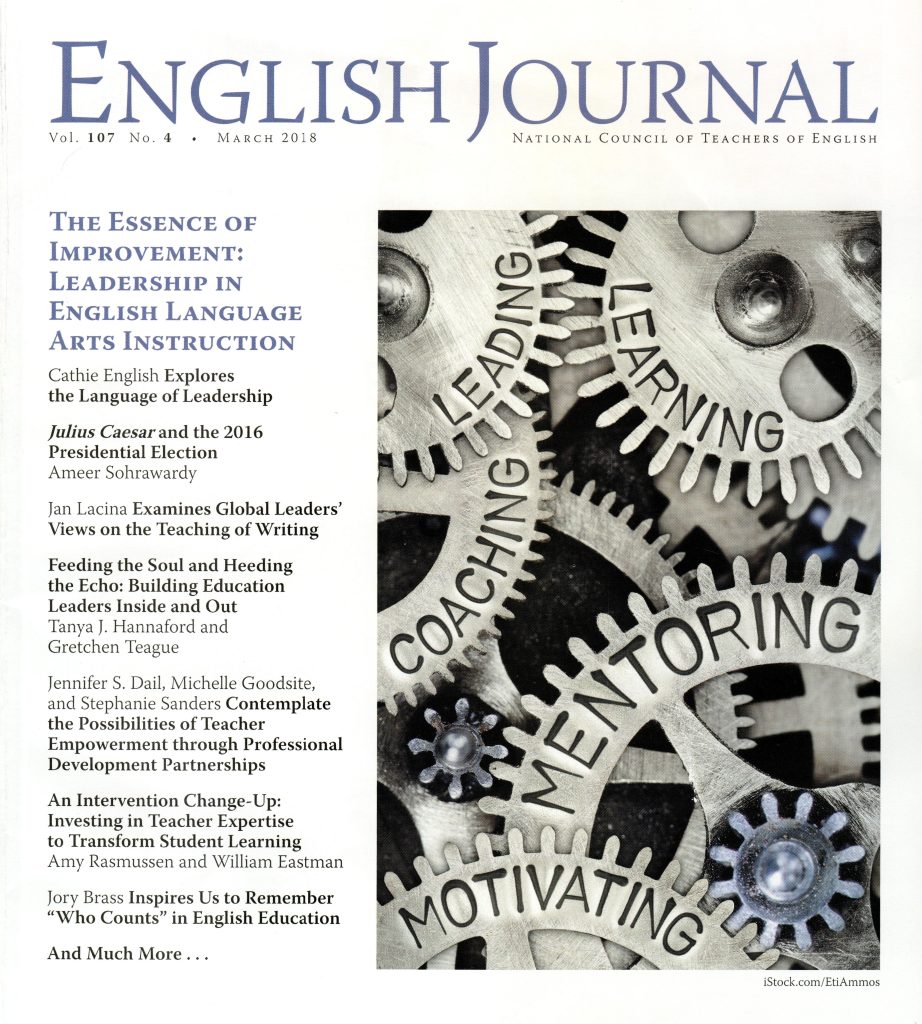
- The leadership team co-authored the story of their curriculum revision process in the National Council of Teachers of English (NCTE’s) English Journal.
Overview
In 2017, Ryan Goble worked as Curriculum Coordinator at Glenbard Township High School District 87. There he used Mindblue Education’s methodology to transform English Language Arts instruction across four high schools serving over 8,000 students. When reviewing performance data, district leaders discovered approximately 25% of ninth-grade English students were earning Ds and Fs, with a disproportionate percentage being students of color. Using Mindblue’s 3P Framework (Purpose, Paradox, Play), Ryan led a systematic four-phase curriculum redesign initiative that reimagined how English was taught across the district.
The resulting model proved both scalable and sustainable, leading to lasting collaboration between teachers across buildings and grades. The process established a curriculum redesign cycle that balanced structure with teacher autonomy, creating meaningful and relevant learning experiences for all students.
Highlights
- 100+ unit plans redesigned across grade levels 9-11
- 17+ teacher-leaders actively involved in curriculum redesign
- 4 high schools (with approximately 8,000 students) and ~80 ELA teachers collaborated on common English curriculum priorities
- The leadership team co-authored the story of their curriculum revision process in the National Council of Teachers of English (NCTE’s) English Journal.
How we used Mindblue Education’s 3P Framework
Purpose
Build powerful professional learning communities that elevate isolated teaching into a collaborative practice that puts student growth at the center
Play
Design structured yet flexible celebratory workshops (a ‘festival of learning’) where teachers showcase classroom practices, receive peer feedback, and build lasting collaborative relationships across grade levels
Paradox
Making teacher collaboration meaningful and actionable while respecting the time constraints and daily demands of classroom teaching
The Challenge
English departments faced multiple barriers to student success: rapidly changing state and national standards, teacher training focused on literature rather than literacy, instruction emphasizing novels over ideas, and inflexible traditional curriculum. Without a framework for change, many teachers felt overwhelmed by the prospect of revision – precisely when students needed more engaging and relevant instruction.
Research by Mary Helen Immordino-Yang at USC underscored the importance of engagement: “It is literally neurobiologically impossible to build memories, engage complex thoughts, or make meaningful decisions without emotion… put succinctly, we only think about things we care about.” Similarly, Jihyun Lee’s research across 13 countries found that “enjoyment of reading in particular was a strong predictor [for success at reading] at both individual and country levels.”
Key Insights
- Teacher Exploration Before Implementation: Journal study sessions allowed educators to discover principles organically, creating authentic buy-in for curriculum changes.
- Simple Rules Framework: Five clear design principles provided direction while preserving teacher autonomy and creativity in unit development.
- Cross-Building Collaboration: Structured sharing across four high schools generated innovations, blending veteran wisdom with fresh perspectives.
- Multimodal Literacy Focus: Shifting from traditional novel studies to diverse texts better engaged today’s students and improved outcomes.
- Sustainable Revision Cycle: The four-phase model created ongoing improvement rather than a one-time curriculum update.
The Challenge
English departments faced multiple barriers to student success: rapidly changing state and national standards, teacher training focused on literature rather than literacy, instruction emphasizing novels over ideas, and inflexible traditional curriculum. Without a framework for change, many teachers felt overwhelmed by the prospect of revision – precisely when students needed more engaging and relevant instruction.
Research by Mary Helen Immordino-Yang at USC underscored the importance of engagement: “It is literally neurobiologically impossible to build memories, engage complex thoughts, or make meaningful decisions without emotion… put succinctly, we only think about things we care about.” Similarly, Jihyun Lee’s research across 13 countries found that “enjoyment of reading in particular was a strong predictor [for success at reading] at both individual and country levels.”
Key Insights
- Teacher Exploration Before Implementation: Journal study sessions allowed educators to discover principles organically, creating authentic buy-in for curriculum changes.
- Simple Rules Framework: Five clear design principles provided direction while preserving teacher autonomy and creativity in unit development.
- Cross-Building Collaboration: Structured sharing across four high schools generated innovations, blending veteran wisdom with fresh perspectives.
- Multimodal Literacy Focus: Shifting from traditional novel studies to diverse texts better engaged today’s students and improved outcomes.
- Sustainable Revision Cycle: The four-phase model created ongoing improvement rather than a one-time curriculum update.
Pivotal Moment
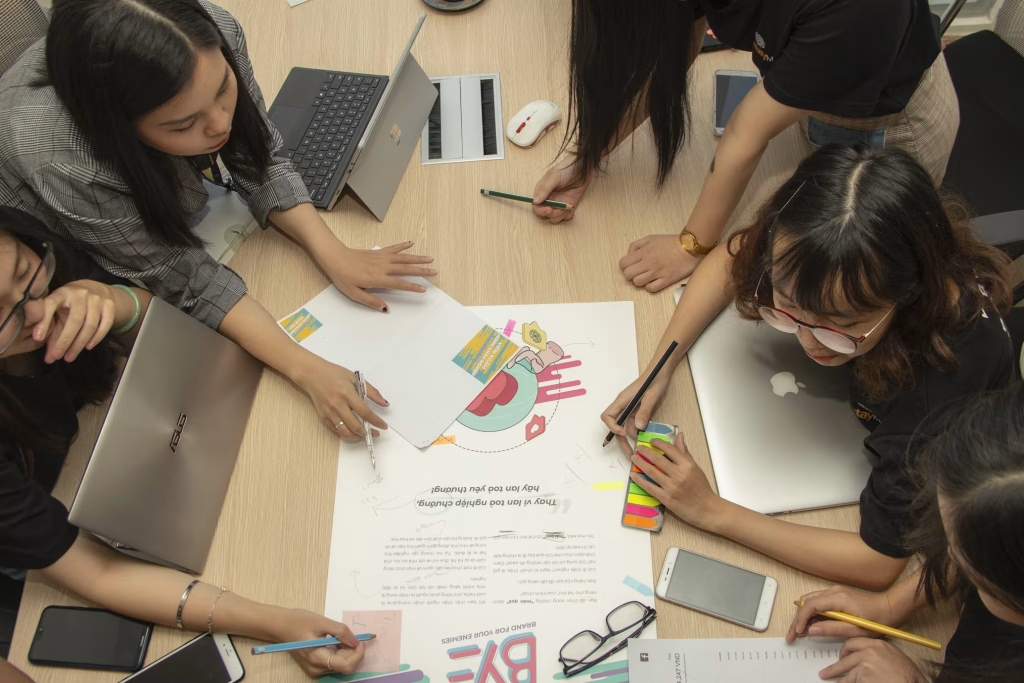
During the first professional development session, the leadership team took an innovative approach. Rather than presenting predetermined solutions, they brought academic journals to teachers and created space for exploration. Teachers went “whale watching” (skipper hats included) to capture the “big ideas” in the field on sticky notes. These notes were then sorted into themes that helped the group develop a more expansive view of what ninth-grade English might become.
This process of discovery rather than directive became the model for all future work. When teachers later developed their own priorities, they closely aligned with leadership’s “simple rules” – creating authentic buy-in that extended far beyond initial training sessions.
The Solution & Implementation Model
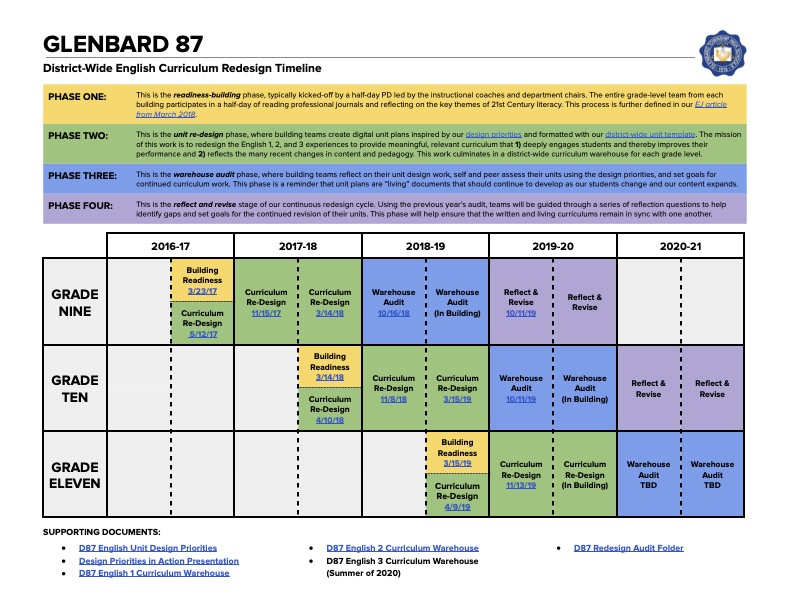
The team developed a four-phase model combining intensive professional development with ongoing collaborative revision:
- Phase 1: Building Readiness – Half-day journal exploration sessions where teachers developed their own vision for 21st-century literacy instruction
- Phase 2: Unit Redesign – Building teams creating digital unit plans using district templates and design priorities
- Phase 3: Warehouse Audit – Peer review and assessment of units using the design priorities as evaluative tools
- Phase 4: Reflect and Revise – Using audit data to guide continued development, ensuring written and living curricula remain in sync
Pivotal Moment
During the first professional development session, the leadership team took an innovative approach. Rather than presenting predetermined solutions, they brought academic journals to teachers and created space for exploration. Teachers went “whale watching” (skipper hats included) to capture the “big ideas” in the field on sticky notes. These notes were then sorted into themes that helped the group develop a more expansive view of what ninth-grade English might become.
This process of discovery rather than directive became the model for all future work. When teachers later developed their own priorities, they closely aligned with leadership’s “simple rules” – creating authentic buy-in that extended far beyond initial training sessions.
Pivotal Moment
During the first professional development session, the leadership team took an innovative approach. Rather than presenting predetermined solutions, they brought academic journals to teachers and created space for exploration. Teachers went “whale watching” (skipper hats included) to capture the “big ideas” in the field on sticky notes. These notes were then sorted into themes that helped the group develop a more expansive view of what ninth-grade English might become.
This process of discovery rather than directive became the model for all future work. When teachers later developed their own priorities, they closely aligned with leadership’s “simple rules” – creating authentic buy-in that extended far beyond initial training sessions.
5 "simple rules" guided the work:
- Student Engagement and Relevance – Connect learning to students’ lives and interests through meaningful questions and real-world connections
- Standards and Skills – Build skills progressively while balancing all aspects of English language arts
- Diversity of Texts – Mix different types, lengths and perspectives in reading materials beyond traditional novels
- Student Choice – Let students choose both what they read and how they show their learning
- Authentic Assessment and Creating Meaning – Move beyond essays – give students multiple ways to demonstrate understanding through real-world tasks
The Solution & Implementation Model
The team developed a four-phase model combining intensive professional development with ongoing collaborative revision:
- Phase 1: Building Readiness – Half-day journal exploration sessions where teachers developed their own vision for 21st-century literacy instruction
- Phase 2: Unit Redesign – Building teams creating digital unit plans using district templates and design priorities
- Phase 3: Warehouse Audit – Peer review and assessment of units using the design priorities as evaluative tools
- Phase 4: Reflect and Revise – Using audit data to guide continued development, ensuring written and living curricula remain in sync
5 "simple rules" guided the work:
- Student Engagement and Relevance – Connect learning to students’ lives and interests through meaningful questions and real-world connections
- Standards and Skills – Build skills progressively while balancing all aspects of English language arts
- Diversity of Texts – Mix different types, lengths and perspectives in reading materials beyond traditional novels
- Student Choice – Let students choose both what they read and how they show their learning
- Authentic Assessment and Creating Meaning – Move beyond essays – give students multiple ways to demonstrate understanding through real-world tasks
The Solution &
Implementation Model
The team developed a four-phase model combining intensive professional development with ongoing collaborative revision:
- Phase 1: Building Readiness – Half-day journal exploration sessions where teachers developed their own vision for 21st-century literacy instruction
- Phase 2: Unit Redesign – Building teams creating digital unit plans using district templates and design priorities
- Phase 3: Warehouse Audit – Peer review and assessment of units using the design priorities as evaluative tools
- Phase 4: Reflect and Revise – Using audit data to guide continued development, ensuring written and living curricula remain in sync
5 "simple rules" guided the work:
- Student Engagement and Relevance – Connect learning to students’ lives and interests through meaningful questions and real-world connections
- Standards and Skills – Build skills progressively while balancing all aspects of English language arts
- Diversity of Texts – Mix different types, lengths and perspectives in reading materials beyond traditional novels
- Student Choice – Let students choose both what they read and how they show their learning
- Authentic Assessment and Creating Meaning – Move beyond essays – give students multiple ways to demonstrate understanding through real-world tasks
Implementations & outcomes
Discover: Partner identification, needs analysis, program design
- Analyzed three years of student performance data
- Formed leadership team of 9 (department chairs, coaches, administrators)
- Developed initial design priorities based on research
- Created process for building teacher ownership
Design: Advisory team workshops, curriculum evaluation, development
- Conducted journal exploration sessions with teacher leaders
- Developed “simple rules” for curriculum redesign
- Created unit design templates aligned to priorities
- Built digital curriculum warehouses for each grade level
Demonstrate: Early implementation, teacher iteration
- Facilitated professional development sessions across four buildings
- Supported teachers in applying design priorities to units
- Established cross-building collaboration protocols
- Conducted ongoing refinement of design priorities
Develop & Disseminate: Implementation tracking, program expansion
- Published research in English Journal (March 2018)
- Expanded model to grades 10 and 11
- Created sustainable peer review and revision cycles
- Shifted focus from content coverage to student engagement
Implementations & outcomes
Discover: Partner identification, needs analysis, program design
- Analyzed three years of student performance data
- Formed leadership team of 9 (department chairs, coaches, administrators)
- Developed initial design priorities based on research
- Created process for building teacher ownership
Design: Advisory team workshops, curriculum evaluation, development
- Conducted journal exploration sessions with teacher leaders
- Developed “simple rules” for curriculum redesign
- Created unit design templates aligned to priorities
- Built digital curriculum warehouses for each grade level
Demonstrate: Early implementation, teacher iteration
- Facilitated professional development sessions across four buildings
- Supported teachers in applying design priorities to units
- Established cross-building collaboration protocols
- Conducted ongoing refinement of design priorities
Develop & Disseminate: Implementation tracking, program expansion
- Published research in English Journal (March 2018)
- Expanded model to grades 10 and 11
- Created sustainable peer review and revision cycles
- Shifted focus from content coverage to student engagement
Implementations & outcomes
Discover: Partner identification, needs analysis, program design
- Analyzed three years of student performance data
- Formed leadership team of 9 (department chairs, coaches, administrators)
- Developed initial design priorities based on research
- Created process for building teacher ownership
Design: Advisory team workshops, curriculum evaluation, development
- Conducted journal exploration sessions with teacher leaders
- Developed “simple rules” for curriculum redesign
- Created unit design templates aligned to priorities
- Built digital curriculum warehouses for each grade level
Demonstrate: Early implementation, teacher iteration
- Facilitated professional development sessions across four buildings
- Supported teachers in applying design priorities to units
- Established cross-building collaboration protocols
- Conducted ongoing refinement of design priorities
Develop & Disseminate: Implementation tracking, program expansion
- Published research in English Journal (March 2018)
- Expanded model to grades 10 and 11
- Created sustainable peer review and revision cycles
- Shifted focus from content coverage to student engagement
Featured Media
Contact
Glenbard District 87’s journey demonstrates how large, diverse districts can transform English instruction through structured collaborative design. Their experience shows that meaningful curriculum redesign doesn’t happen through mandates but through creating spaces for teachers to discover, create, and refine together. Contact Mindblue Education to explore how we can help your district reimagine literacy instruction with simple rules that drive big changes.