Giant Steps: A District's Professional Learning Journey
CUSD 201's journey from isolated teaching to collaborative excellence
Giant Steps: A District's Professional Learning Journey
CUSD 201's journey from isolated teaching to collaborative excellence
Giant Steps: A District's Professional Learning Journey
CUSD 201's journey from isolated teaching to collaborative excellence
Overview
Located just 20 miles west of Chicago, Community Unit School District 201 serves approximately 1,300 students across five schools in DuPage County. In 2010, this intimate and high-performing district partnered with Mindblue Education to launch the “Small Giants Project” (SGP)—an ambitious five-year initiative to transform classroom instruction by leveraging the district’s small size as its greatest advantage.
The initiative’s name reflected the district’s unique position: though smaller than many neighboring districts, CUSD 201 aimed to achieve outsized impact through focused collaboration and excellence in teaching practice. The district’s size – with just over 100 teachers across five schools – created ideal conditions for the kind of deep, sustained professional development that larger districts often struggle to achieve. The resulting model proved both scalable and sustainable. All 100+ teachers engaged in year-long personalized learning projects that culminated in district-wide sharing sessions. There, educators showcased their work and its impact on student achievement.
Hightlights
- 200+ individual teacher professional learning projects developed
- Initiative seamlessly integrated into existing professional learning schedule and professional learning community (PLC) time
- Co-designed by 20+ Leadership team that included building admin, instructional leaders and teachers
Overview
Located just 20 miles west of Chicago, Community Unit School District 201 serves approximately 1,300 students across five schools in DuPage County. In 2010, this intimate and high-performing district partnered with Mindblue Education to launch the “Small Giants Project” (SGP)—an ambitious five-year initiative to transform classroom instruction by leveraging the district’s small size as its greatest advantage.
The initiative’s name reflected the district’s unique position: though smaller than many neighboring districts, CUSD 201 aimed to achieve outsized impact through focused collaboration and excellence in teaching practice. The district’s size – with just over 100 teachers across five schools – created ideal conditions for the kind of deep, sustained professional development that larger districts often struggle to achieve. The resulting model proved both scalable and sustainable. All 100+ teachers engaged in year-long personalized learning projects that culminated in district-wide sharing sessions. There, educators showcased their work and its impact on student achievement.
Highlights
- 200+ individual teacher professional learning projects developed
- Initiative seamlessly integrated into existing professional learning schedule and professional learning community (PLC) time
- Co-designed by 20+ Leadership team that included building admin, instructional leaders and teachers
How we used Mindblue Education’s 3P Framework
Purpose
Build powerful professional learning communities that elevate isolated teaching into a collaborative practice that puts student growth at the center
Play
Design structured yet flexible celebratory workshops (a ‘festival of learning’) where teachers showcase classroom practices, receive peer feedback, and build lasting collaborative relationships across grade levels
Paradox
Making teacher collaboration meaningful and actionable while respecting the time constraints and daily demands of classroom teaching
The Challenge
As education evolved in the 2010s, CUSD 201 faced a critical challenge: How could a smaller district with limited resources create world-class professional learning experiences? Teachers worked diligently in their individual classrooms but lacked structured opportunities to collaborate and share best practices. Professional development sessions often contradicted their own message—delivering passive, lecture-based training while expecting teachers to implement active, student-centered learning strategies. The district needed to transform professional learning from isolated experiences into a cohesive, collaborative practice that mirrored the very teaching methods they wanted in classrooms.
Key Insights
- Teacher Expertise Activation: Structured peer workshops unlocked existing expertise within the district, transforming isolated practices into collective professional knowledge.
- Balanced Protocol Framework: Clear structures with teacher autonomy created ideal conditions for innovation—providing consistency while honoring classroom context.
- Cross-Grade Pollination: Intentional mixing of educators across grades and subjects generated innovations, blending veteran wisdom with fresh perspectives.
- Public Practice Model: Showcase workshops and digital galleries shifted culture from private to public teaching, normalizing peer observation as a growth tool.
- Informal Learning Environment: Conversational, celebratory atmosphere created the psychological safety necessary for authentic risk-taking and vulnerable sharing.
Pivotal Moment
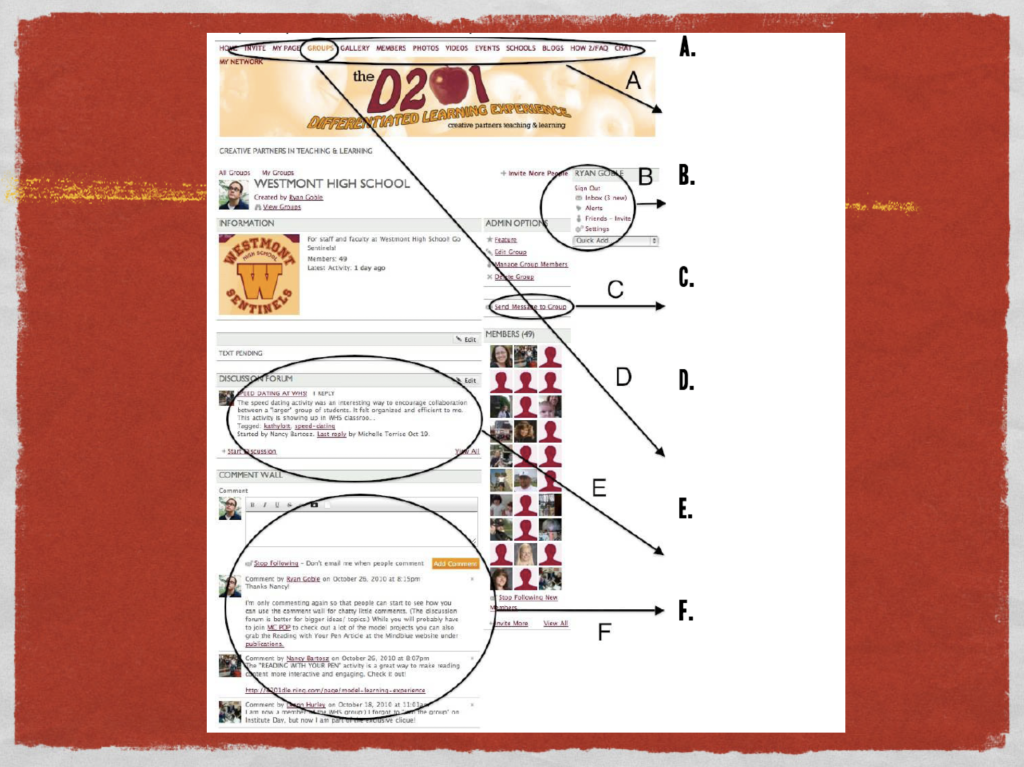
During early implementation of our Creative Partners Workshops, insights emerged at a rapid clip. As teachers began sharing practices across grade levels and subject areas, we moved beyond the traditional professional development dynamic. Veteran teachers offered classroom perspectives while newer teachers brought fresh ideas. This organic exchange became the model for all future workshops, creating lasting collaborative relationships that extended beyond initial training sessions.
The Solution & Implementation Model
In order to solve the challenge of isolated teaching practices and ineffective professional development that contradicted the student-centered approaches teachers needed to implement, the team developed a hybrid learning model blending structured workshops with ongoing peer collaboration. Key components included:
- Collaborative workshops where teachers presented learning experiences and received structured feedback
- Cross-grade level and subject area professional dialogues focused on student engagement strategies
- Dedicated reflection time for teachers to process and adapt new practices
- Regular opportunities to make teaching public through shared workshops and online galleries
The Challenge
As education evolved in the 2010s, CUSD 201 faced a critical challenge: How could a smaller district with limited resources create world-class professional learning experiences? Teachers worked diligently in their individual classrooms but lacked structured opportunities to collaborate and share best practices. Professional development sessions often contradicted their own message—delivering passive, lecture-based training while expecting teachers to implement active, student-centered learning strategies. The district needed to transform professional learning from isolated experiences into a cohesive, collaborative practice that mirrored the very teaching methods they wanted in classrooms.
Key Insights
- Teacher Expertise Activation: Structured peer workshops unlocked existing expertise within the district, transforming isolated practices into collective professional knowledge.
- Balanced Protocol Framework: Clear structures with teacher autonomy created ideal conditions for innovation—providing consistency while honoring classroom context.
- Cross-Grade Pollination: Intentional mixing of educators across grades and subjects generated innovations, blending veteran wisdom with fresh perspectives.
- Public Practice Model: Showcase workshops and digital galleries shifted culture from private to public teaching, normalizing peer observation as a growth tool.
- Informal Learning Environment: Conversational, celebratory atmosphere created the psychological safety necessary for authentic risk-taking and vulnerable sharing.
Pivotal Moment
During early implementation of our Creative Partners Workshops, insights emerged at a rapid clip. As teachers began sharing practices across grade levels and subject areas, we moved beyond the traditional professional development dynamic. Veteran teachers offered classroom perspectives while newer teachers brought fresh ideas. This organic exchange became the model for all future workshops, creating lasting collaborative relationships that extended beyond initial training sessions.
Pivotal Moment
During early implementation of our Creative Partners Workshops, insights emerged at a rapid clip. As teachers began sharing practices across grade levels and subject areas, we moved beyond the traditional professional development dynamic. Veteran teachers offered classroom perspectives while newer teachers brought fresh ideas. This organic exchange became the model for all future workshops, creating lasting collaborative relationships that extended beyond initial training sessions.
Pivotal Moment
During early implementation of our Creative Partners Workshops, insights emerged at a rapid clip. As teachers began sharing practices across grade levels and subject areas, we moved beyond the traditional professional development dynamic. Veteran teachers offered classroom perspectives while newer teachers brought fresh ideas. This organic exchange became the model for all future workshops, creating lasting collaborative relationships that extended beyond initial training sessions.
The Solution & Implementation Model
In order to solve the challenge of isolated teaching practices and ineffective professional development that contradicted the student-centered approaches teachers needed to implement, the team developed a hybrid learning model blending structured workshops with ongoing peer collaboration. Key components included:
- Collaborative workshops where teachers presented learning experiences and received structured feedback
- Cross-grade level and subject area professional dialogues focused on student engagement strategies
- Dedicated reflection time for teachers to process and adapt new practices
- Regular opportunities to make teaching public through shared workshops and online galleries
Implementations & outcomes
Our two year partnership with CUSD 201 included:
Discover: Teacher needs analysis, program design
- Conducted 5 building-level needs assessments
- Performed ~45 classroom observations across all grade levels
- Formed 25-member leadership team with representatives from each building
Design: Workshop protocols, collaborative structures
- Created annual professional learning calendar integrated with existing district schedule
- Developed customized support plans for each of the five schools
- Launched pilot cohorts in each building to test collaborative protocols
Demonstrate: Teacher feedback, classroom implementation
- Facilitated 200+ end-of-year showcase sessions led by teacher teams
- Built digital repository capturing 100+ teacher projects and resources
- Implemented “Critical Friends” feedback protocol with ~98% teacher participation
Develop & Dissemination: Program reflection, expansion, model refinement
By year two of implementation, the district reported:
- Increased teacher collaboration and sharing of best practices
- Improved cross-grade level articulation of teaching strategies
- Measurable shift from teacher-centered to student-centered instruction
- Development of sustainable professional learning communities
- Creation of replicable workshop protocols and feedback frameworks
Implementations & outcomes
Our two year partnership with CUSD 201 included:
Discover: Teacher needs analysis, program design
- Conducted 5 building-level needs assessments
- Performed ~45 classroom observations across all grade levels
- Formed 25-member leadership team with representatives from each building
Design: Workshop protocols, collaborative structures
- Created annual professional learning calendar integrated with existing district schedule
- Developed customized support plans for each of the five schools
- Launched pilot cohorts in each building to test collaborative protocols
Demonstrate: Teacher feedback, classroom implementation
- Facilitated 200+ end-of-year showcase sessions led by teacher teams
- Built digital repository capturing 100+ teacher projects and resources
- Implemented “Critical Friends” feedback protocol with ~98% teacher participation
Develop & Dissemination: Program reflection, expansion, model refinement
By year two of implementation, the district reported:
- Increased teacher collaboration and sharing of best practices
- Improved cross-grade level articulation of teaching strategies
- Measurable shift from teacher-centered to student-centered instruction
- Development of sustainable professional learning communities
- Creation of replicable workshop protocols and feedback frameworks
Implementations & outcomes
Our two year partnership with CUSD 201 included:
Discover: Teacher needs analysis, program design
- Conducted 5 building-level needs assessments
- Performed ~45 classroom observations across all grade levels
- Formed 25-member leadership team with representatives from each building
Design: Workshop protocols, collaborative structures
- Created annual professional learning calendar integrated with existing district schedule
- Developed customized support plans for each of the five schools
- Launched pilot cohorts in each building to test collaborative protocols
Demonstrate: Teacher feedback, classroom implementation
- Facilitated 200+ end-of-year showcase sessions led by teacher teams
- Built digital repository capturing 100+ teacher projects and resources
- Implemented “Critical Friends” feedback protocol with ~98% teacher participation
Develop & Dissemination: Program reflection, expansion, model refinement
By year two of implementation, the district reported:
- Increased teacher collaboration and sharing of best practices
- Improved cross-grade level articulation of teaching strategies
- Measurable shift from teacher-centered to student-centered instruction
- Development of sustainable professional learning communities
- Creation of replicable workshop protocols and feedback frameworks